Understanding the difference between metallic silver and gray prom dresses is more complex than simply comparing two neutral colors. Although both belong to the cool-tone spectrum and are often grouped together in fashion discussions, they produce entirely different visual outcomes when worn in real environments. The distinction lies in how each fabric interacts with light, how it shapes perception of silhouette, and how it communicates personal style identity.
In modern prom fashion, color is no longer just aesthetic preference. It has become a tool of visual communication. A dress does not only need to look beautiful; it needs to perform under lighting, photography, and movement. This is where confusion between silver and gray often appears. On a screen, they can seem similar. In real life, however, metallic silver behaves like a reflective surface, while gray behaves like a visual absorber.
At Argenté, neutral tones are treated as structured design systems rather than simple color options. Each fabric is chosen based on how it interacts with light, movement, and silhouette architecture. This guide breaks down the difference between metallic silver and gray prom dresses in depth, focusing on fabric science, color psychology, styling behavior, and visual identity outcomes.
Understanding Metallic Silver vs Gray Prom Dresses
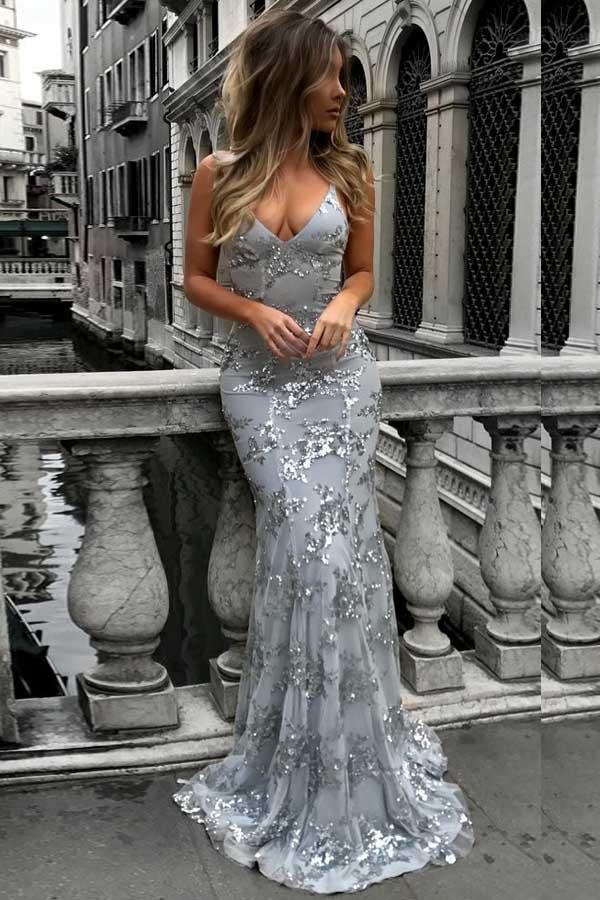
To truly understand the difference between metallic silver and gray prom dresses, it is necessary to move beyond surface color perception and examine the underlying visual mechanics. Both shades sit within the neutral family, but their performance in fashion is fundamentally opposite.
Silver is active. Gray is passive.
Silver reflects. Gray absorbs.
Silver amplifies attention. Gray stabilizes it.
This core contrast defines everything from how the dress appears in photographs to how it frames the wearer in motion.
In modern formalwear color psychology, silver is often categorized as a “high-response visual color,” meaning it reacts strongly to lighting and environment. Gray, in contrast, is categorized as a “low-response visual color,” meaning it remains visually consistent regardless of surroundings.
What Defines Metallic Silver Dresses
Metallic silver prom dresses are designed around light interaction rather than static appearance. The fabric is engineered or treated to reflect surrounding light sources, which creates a dynamic surface that changes depending on movement, angle, and exposure.
In reflective fabric prom dress behavior, metallic silver typically features:
- light-diffusing satin coatings
- sequined or metallic-thread weaving
- polished surface finishes that increase reflectivity
This results in a dress that appears brighter under flash photography and more dimensional under movement.
From a fashion silhouette perception theory perspective, silver does more than reflect light. It visually expands certain areas of the body depending on where the light hits. This can enhance curves, emphasize structure, or create optical highlights that draw attention to specific design elements.
This is why silver is heavily used in luxury metallic evening gowns and red carpet-inspired prom designs. It is not neutral in effect, even though it is neutral in color. It actively participates in visual storytelling.
What Defines Gray Prom Dresses
In contrast, gray prom dresses are designed for visual control rather than visual expansion. Gray does not reflect light aggressively; instead, it diffuses it softly, creating a stable and grounded appearance.
In matte gray evening gown construction, fabrics often include:
- matte satin with reduced sheen
- chiffon layers for softness
- crepe textures for structured flow
This creates a completely different visual behavior compared to silver. Instead of reacting to lighting, gray maintains consistency across environments.
In minimal glam aesthetic direction, gray is often associated with:
- understated elegance
- editorial simplicity
- refined modern minimalism
Rather than standing out through brightness, gray stands out through restraint and balance. It allows silhouette and structure to become the focal point rather than surface shine.
Key Visual Differences in Lighting and Photography
One of the most critical aspects of the difference between metallic silver and gray prom dresses is how each performs under lighting conditions, especially flash photography and indoor event lighting.
In event lighting fashion adaptation:
Metallic silver:
- intensifies brightness under flash
- creates specular highlights on fabric folds
- produces a shimmering, almost liquid effect in motion
- changes appearance depending on angle and distance
Gray:
- remains visually stable under all lighting conditions
- reduces glare and overexposure in photos
- maintains consistent tone in both warm and cool lighting
- produces soft, controlled shadows instead of reflection bursts
This difference significantly affects how each dress is perceived in prom photography. Silver dresses often appear more dramatic and cinematic, while gray dresses appear more editorial and timeless.
Color Psychology in Depth: Why Metallic Silver and Gray Create Completely Different Fashion Identities
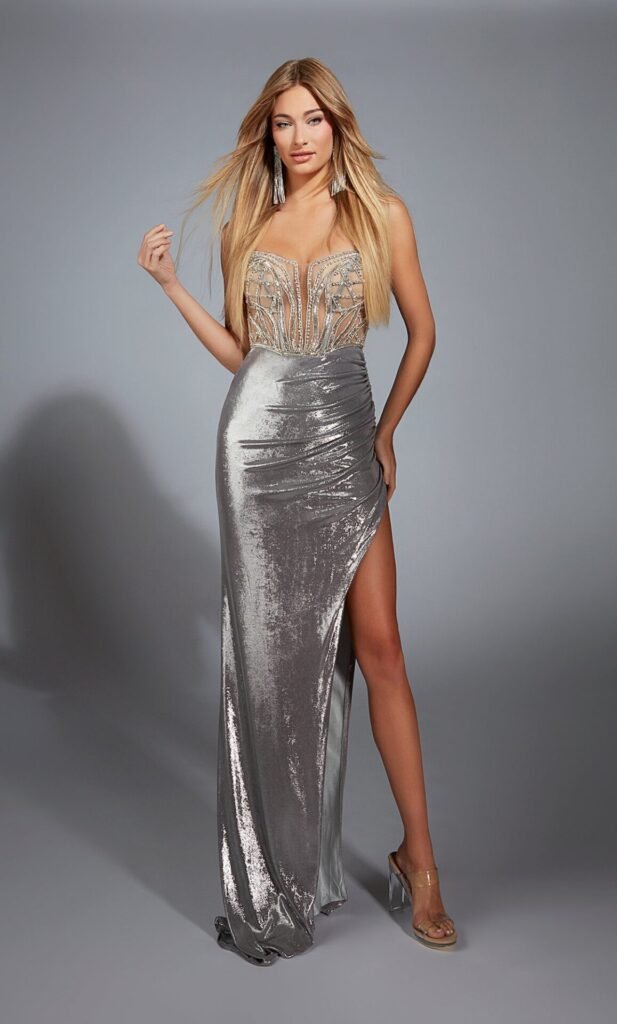
To truly understand the difference between metallic silver and gray prom dresses, we need to go beyond surface-level aesthetics and examine how each color functions as a psychological signal in fashion communication. In formalwear, color is not just decoration. It is a structured visual language that influences perception, emotion, and even confidence behavior.
In fashion color psychology, metallic silver and gray sit within the same neutral category, but they produce opposite emotional effects. Silver is expressive and high-energy, while gray is stabilizing and controlled. This is why two dresses that seem similar in tone can feel completely different when worn in real environments.
Silver tends to activate visual attention. It reflects surroundings, reacts to movement, and creates a sense of constant visual change. Gray, on the other hand, minimizes stimulation. It reduces visual noise and allows the silhouette itself to define the outfit identity.
This contrast is not accidental. It is rooted in how the human eye processes brightness, contrast, and reflection, which directly impacts how we interpret modern formalwear color trends.
Metallic Silver: Visibility, Confidence, and Expressive Identity
In luxury metallic evening gowns, silver is strongly associated with visibility and presence. It is not a background color; it is a foreground statement.
Silver communicates:
- confidence-driven styling
- high visibility intention
- modern glam identity expression
Because metallic surfaces reflect light, silver dresses behave almost like dynamic objects rather than static garments. In motion, they shift brightness depending on angle, which creates a cinematic effect often seen in red carpet fashion influence.
From a fashion silhouette perception theory perspective, silver enhances perceived movement even when the wearer is still. Light reflection across folds and seams creates visual depth that makes the dress appear alive under lighting.
This is why silver is frequently chosen for prom events where photography, video, and social visibility are central.
Gray: Subtle Authority and Minimalist Emotional Control
Gray operates in a completely different emotional category. In minimal glam aesthetic direction, gray represents restraint, clarity, and composure.
Gray communicates:
- emotional stability
- refined elegance
- understated sophistication
Unlike silver, gray does not demand attention. Instead, it organizes visual perception. It allows viewers to focus on structure, posture, and tailoring rather than surface shine.
In wardrobe tonal hierarchy, gray is often considered a grounding color. It does not overpower other elements in an outfit and is frequently used in minimalist luxury fashion systems.
This makes gray ideal for individuals who prefer quiet confidence over expressive visibility.
Emotional Contrast in Real-Life Styling Contexts
The difference between metallic silver and gray prom dresses becomes most obvious in real social environments such as prom nights, indoor lighting, and photography sessions.
In event lighting fashion adaptation:
Metallic silver:
- reacts strongly to flash photography
- creates highlight bursts across fabric
- enhances motion visibility in video
- shifts tone depending on light source
Gray:
- remains visually consistent in all lighting
- produces soft, controlled shadows
- reduces glare in photography
- maintains stable tone perception
This is why silver is often described as “camera reactive,” while gray is described as “camera stable.”
Fabric Behavior and Texture Science: How Silver and Gray Actually Perform
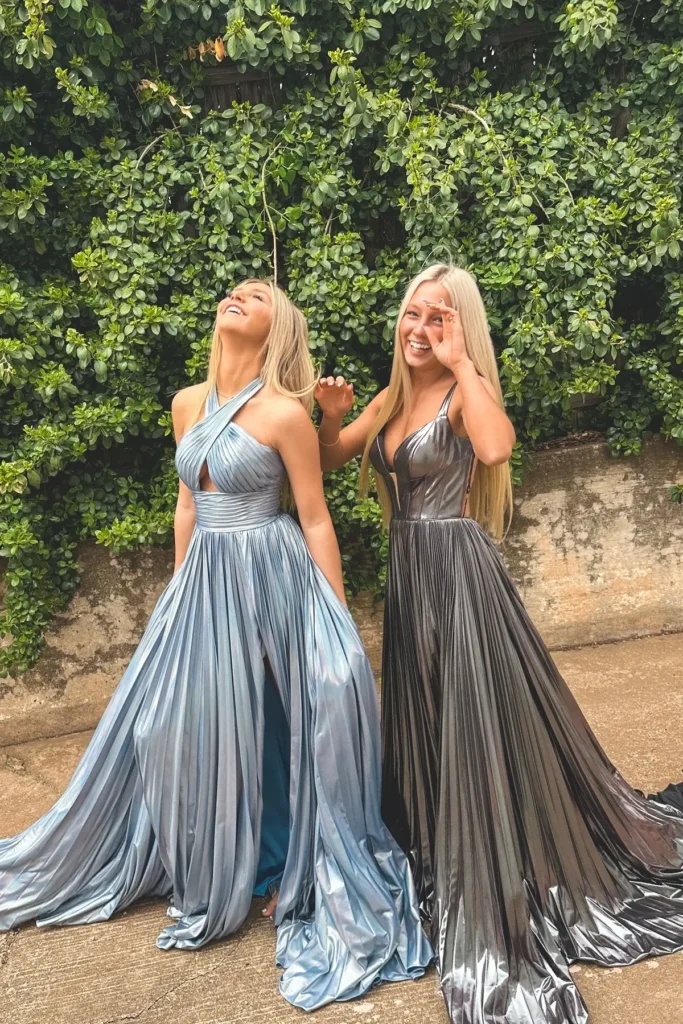
The difference between metallic silver and gray prom dresses is not only visual but structural. Fabric type, weave density, and surface finish all influence how these colors behave.
Metallic Silver Fabric: Reflection Engineering and Light Amplification
In reflective fabric prom dress behavior, metallic silver is often created using coated satin, foil finishes, or embedded metallic fibers.
These materials:
- increase surface reflectivity
- amplify surrounding light sources
- create directional shine effects
- enhance movement-based shimmer
In technical fashion terms, metallic silver functions like a light-modulating surface. It does not simply display color; it interacts with the environment.
This is why silver dresses often appear different under:
- indoor warm lighting
- outdoor daylight
- flash photography
Each environment creates a different visual version of the same garment.
Gray Fabric: Absorption, Soft Diffusion, and Visual Stability
Gray fabrics behave differently. In fabric light absorption behavior, gray materials are designed to reduce reflection and distribute light evenly.
This results in:
- soft transitions between highlights and shadows
- reduced glare in photography
- consistent color appearance across lighting conditions
- clearer visibility of garment structure
Unlike silver, gray does not amplify lighting conditions. Instead, it neutralizes them.
This makes gray highly effective in structured elegance vs fluid silhouette contrast, where silhouette design is more important than surface shine.
Satin Gray vs Metallic Silver Interaction Layer
Satin gray introduces a hybrid effect between matte gray and metallic silver.
In silhouette perception theory, satin gray:
- creates subtle luminosity without full reflection
- maintains softness while adding depth
- enhances fabric flow without visual overload
This positions satin gray as a transitional option for individuals who want elegance without high-intensity shine.
Silver remains at the opposite end of the spectrum, delivering maximum visual impact.
Styling System Deep Dive: Full Control Architecture for Both Colors
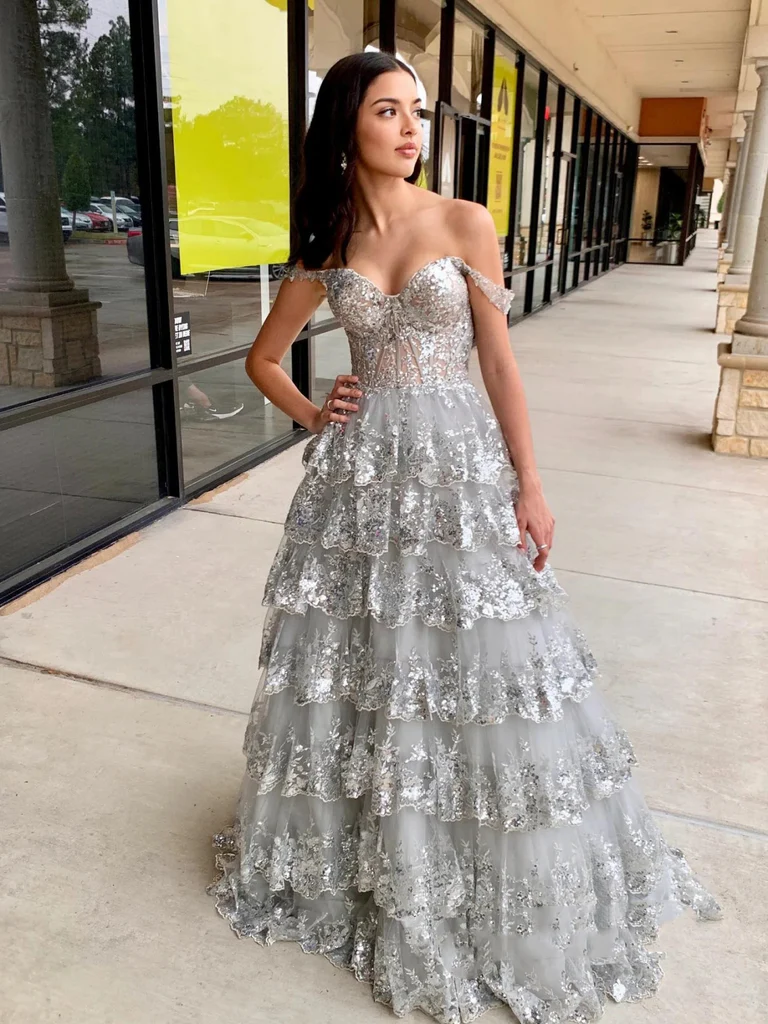
Because the difference between metallic silver and gray prom dresses is so significant, styling systems must adapt completely depending on the chosen color.
Metallic Silver Styling Architecture
In fashion silhouette perception theory, silver requires controlled styling because the dress already dominates visual attention.
Footwear Strategy
Best footwear choices include:
- nude heels for elongation and neutrality
- silver heels for tonal continuity
- transparent straps for visual reduction
Avoid heavy embellishment in shoes, as it competes with reflective fabric behavior.
Makeup Strategy
Makeup must avoid visual duplication of shine.
Recommended direction:
- soft sculpted eyes with neutral tones
- controlled highlight placement
- balanced lip color (not overly glossy)
This ensures harmony in fashion statement dressing psychology, where one focal point must dominate.
Hair Strategy
Hair acts as a stabilizing element:
- sleek buns for structural balance
- straight styles for clean lines
- soft waves for controlled contrast
The goal is not to compete with reflection but to frame it.
Gray Styling Architecture
Gray requires the opposite approach: adding dimension rather than controlling excess.
Footwear Strategy
- nude tones for elongation
- soft black for grounding
- minimal metallic accents for subtle depth
Makeup Strategy
Gray allows more expressive makeup flexibility:
- warm neutral palettes
- soft contouring for structure
- gentle shimmer for dimension
Unlike silver, gray benefits from added visual layering.
Hair Strategy
Gray supports more variation:
- loose waves for softness
- textured ponytails for modern edge
- low buns for elegant simplicity
This aligns with minimal glam aesthetic direction, where subtle complexity replaces high contrast.
Undertone Matching and Skin Harmony Logic
Another critical part of the difference between metallic silver and gray prom dresses is how each interacts with skin undertones.
In fashion color psychology, undertone matching influences overall harmony:
Metallic silver:
- enhances cool undertones strongly
- increases contrast on warm skin tones
- creates high brightness reflection near face
Gray:
- blends smoothly with neutral undertones
- softens contrast across all skin tones
- produces balanced, natural integration
This is why silver feels more dramatic in photos, while gray feels more natural in person.
Modern Fashion Trends Shaping Silver vs Gray Choices
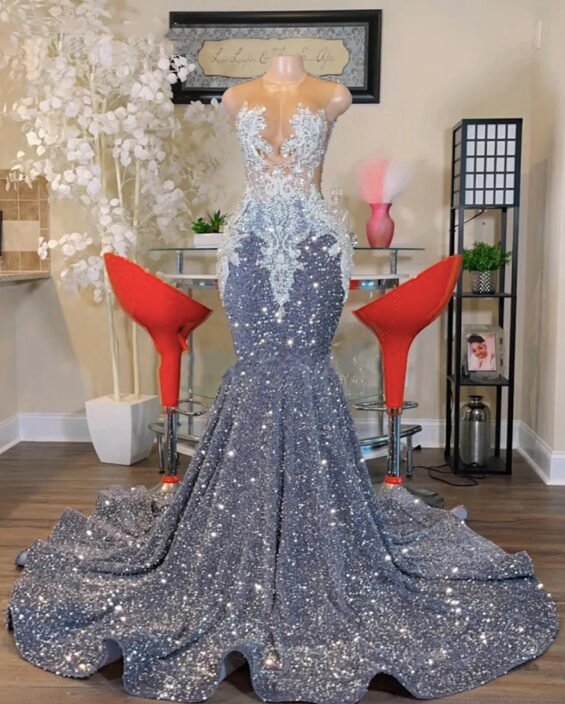
In fashion-forward youth formalwear trends, prom dresses are increasingly influenced by digital culture, short-form video, and aesthetic-driven styling.
Social Media Impact on Dress Selection
Silver performs strongly in:
- motion videos
- flash photography
- high-contrast lighting
Gray performs better in:
- editorial-style photography
- minimalist aesthetic feeds
- soft lighting environments
This difference has significantly widened the styling gap between the two colors.
Red Carpet Influence and Editorial Direction
In red carpet fashion influence, silver dominates high-impact celebrity looks, while gray appears in minimalist luxury collections.
Silver represents spectacle.
Gray represents refinement.
Discover Silver and Gray Prom Dresses at Argenté
At Argenté, both silver and gray prom dresses are designed through a structured fashion engineering approach rather than surface color selection.
Silver collection focuses on:
- high-impact reflective gowns
- sculptural silhouettes
- movement-enhancing designs
Gray collection focuses on:
- minimalist structured gowns
- soft tailored elegance
- understated modern luxury
Each design is created to align with different identity expressions, ensuring that the wearer chooses based on intention, not trend pressure.
Conclusion
The difference between metallic silver and gray prom dresses ultimately comes down to visual energy, emotional communication, and styling purpose.
Metallic silver is expressive, reflective, and attention-driven. It amplifies presence, enhances movement, and creates high-impact visual identity. Gray is subtle, stable, and refined. It reduces visual noise, emphasizes structure, and communicates quiet elegance.
Neither option is superior. They simply serve different fashion identities. Silver is for visibility and statement styling. Gray is for control and understated sophistication.
At Argenté, both directions are intentionally designed to support modern formalwear expression, allowing each wearer to choose not just a dress color, but a visual identity that reflects how they want to be seen.