A silver prom dress appropriate for formal events is no longer a simple yes-or-no question in modern fashion. What used to be strictly categorized as “prom-only” attire has now evolved into a flexible formalwear option that can extend into galas, cocktail evenings, and even wedding guest styling when handled correctly. The shift comes from how contemporary fashion treats metallic fabrics not as occasion-limited garments, but as adaptable visual tools that respond to styling, lighting, and context.
However, the key issue is not whether silver is “allowed,” but whether it is appropriate in execution. A silver dress can look perfectly elegant at a gala and completely out of place at a wedding depending on how it is styled, how reflective it is, and how it interacts with the dress code expectations of the event. That is why understanding a silver prom dress appropriate for formal events requires more than fashion taste; it requires awareness of etiquette, visual hierarchy, and styling control.
At Argenté, silver is treated as a structured formalwear tone that sits between minimal elegance and statement luxury. Its versatility depends entirely on how it is balanced with accessories, fabric texture, silhouette, and event context. This guide explains when a silver prom dress works for galas and weddings, when it does not, and how to adapt it so it feels intentional rather than misplaced.
Understanding Formal Dress Codes and Where Silver Fits
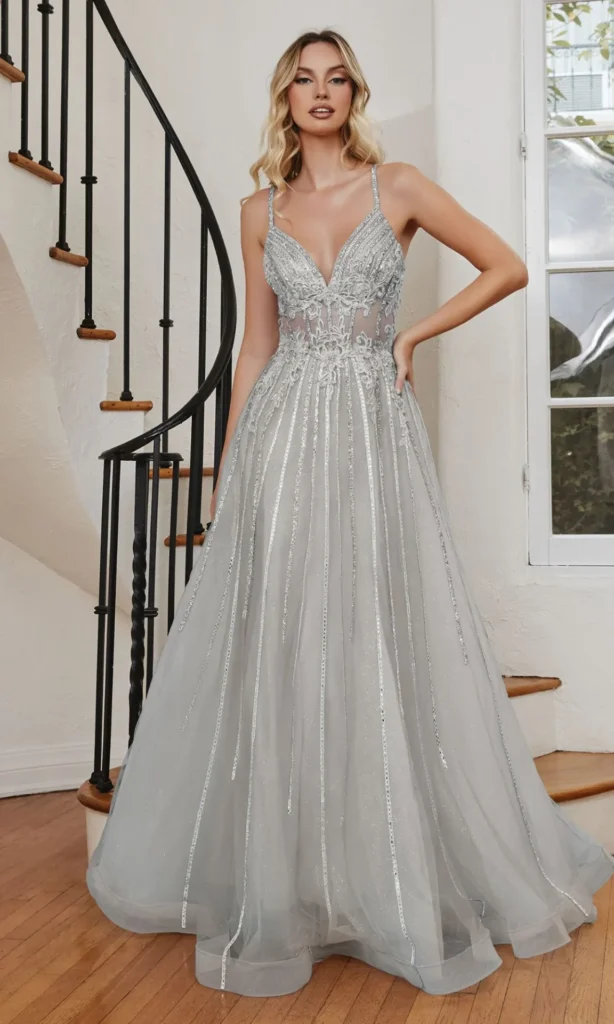
To evaluate whether a silver prom dress appropriate for formal events can be reused across different occasions, you first need to understand how formal dress codes are structured. Each event type carries a different expectation of visual intensity, silhouette behavior, and styling restraint.
Silver does not exist in isolation; its appropriateness depends on the environment it enters.
Gala Dress Code Explained
Gala events are among the most flexible and fashion-forward formal environments. They often encourage statement dressing, especially in evening settings with controlled lighting and photography.
In eveningwear dress code fashion rules, galas typically allow:
- metallic fabrics and reflective materials
- structured or dramatic silhouettes
- high-impact styling choices
This makes a silver evening gown styling guide highly relevant in gala contexts. Silver works well here because it:
- reflects ambient lighting elegantly
- enhances photography under flash conditions
- aligns with luxury evening aesthetics
However, the key distinction is refinement. A prom-style silver dress must be elevated to feel gala-appropriate rather than youthful or overly decorative.
Wedding Guest Dress Etiquette
Weddings introduce a much stricter styling framework. Unlike galas, where individuality is encouraged, weddings prioritize balance, respect, and visual harmony with the ceremony setting.
In wedding guest outfit metallic tones, silver is acceptable only when it does not dominate attention.
Key etiquette principles include:
- avoiding excessive sparkle or overly reflective fabrics
- maintaining understated elegance rather than statement dominance
- ensuring silhouette does not compete with bridal aesthetics
A silver prom dress appropriate for formal events can be worn to weddings, but only if it is softened through styling restraint. Without this adjustment, it risks feeling too attention-heavy for the occasion.
Semi-Formal vs Formal Event Differences
Understanding where silver fits also requires separating event formality levels.
In formalwear dress code expectations:
- Semi-formal → soft fabrics, minimal shine, lighter styling
- Formal → structured gowns, controlled metallics, elegant silhouettes
- Black-tie → high glamour, refined statement dressing
Silver naturally aligns with formal and black-tie categories, but it becomes risky in semi-formal environments unless significantly toned down.
This classification determines whether a silver prom dress appropriate for formal events feels elevated or excessive.
Where Silver Fits in Formal Hierarchy
In fashion hierarchy systems, silver is considered a “controlled statement neutral.” It is not as aggressive as neon or jewel tones, but it is also not as understated as black, navy, or nude palettes.
This makes silver:
- highly adaptable but context-sensitive
- visually impactful without being loud
- dependent on styling direction
Within formal dress etiquette silver outfit guide logic, silver sits in a flexible zone where success depends on execution rather than color itself.
Is a Silver Prom Dress Appropriate for Galas?
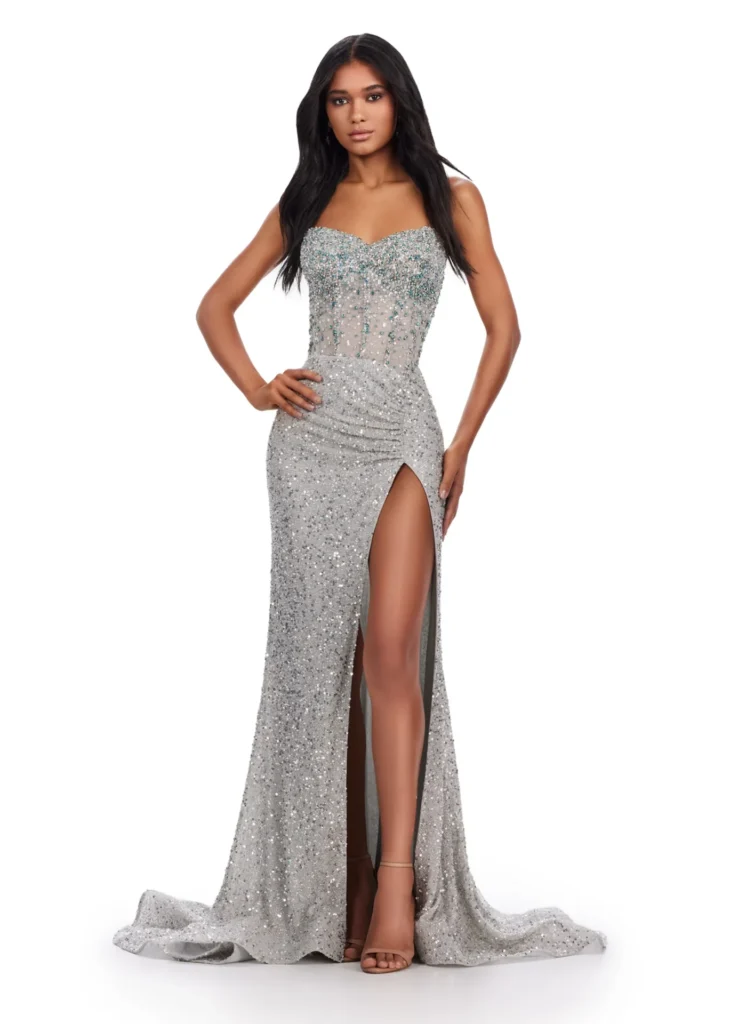
A silver prom dress appropriate for formal events is generally well-suited for gala environments, but only when elevated beyond its prom identity.
When Silver Dresses Work at Gala Events
Galas are one of the most compatible environments for silver because of lighting design and photography expectations.
Silver performs well because:
- it interacts beautifully with artificial lighting
- it enhances movement in photography
- it aligns with red carpet-inspired aesthetics
In luxury formalwear styling tips, silver is often considered a safe yet visually impactful choice for gala events, especially when paired with structured design and minimal styling clutter.
When Silver May Feel Too Casual or Too Prom-Like
Not all silver dresses automatically fit gala standards. Some designs remain too closely tied to prom aesthetics.
Common issues include:
- excessive sequins or glitter-heavy surfaces
- overly youthful silhouettes (flared, overly decorative cuts)
- lack of tailoring or structural refinement
In these cases, the outfit may fail to meet formalwear dress code expectations, appearing more like event-specific attire than elevated eveningwear.
How to Elevate a Silver Prom Dress for Gala Settings
Transforming a silver prom dress appropriate for formal events into a gala-ready outfit requires intentional refinement.
Key styling adjustments include:
- replacing statement accessories with minimal luxury pieces
- choosing sleek hairstyles like buns or soft structured waves
- shifting makeup toward sculpted, neutral-toned elegance
- using refined heels instead of heavily embellished shoes
These changes reposition the dress within sophisticated silver gown ideas, moving it from prom styling into formal eveningwear territory.
Can You Wear a Silver Prom Dress to a Wedding?
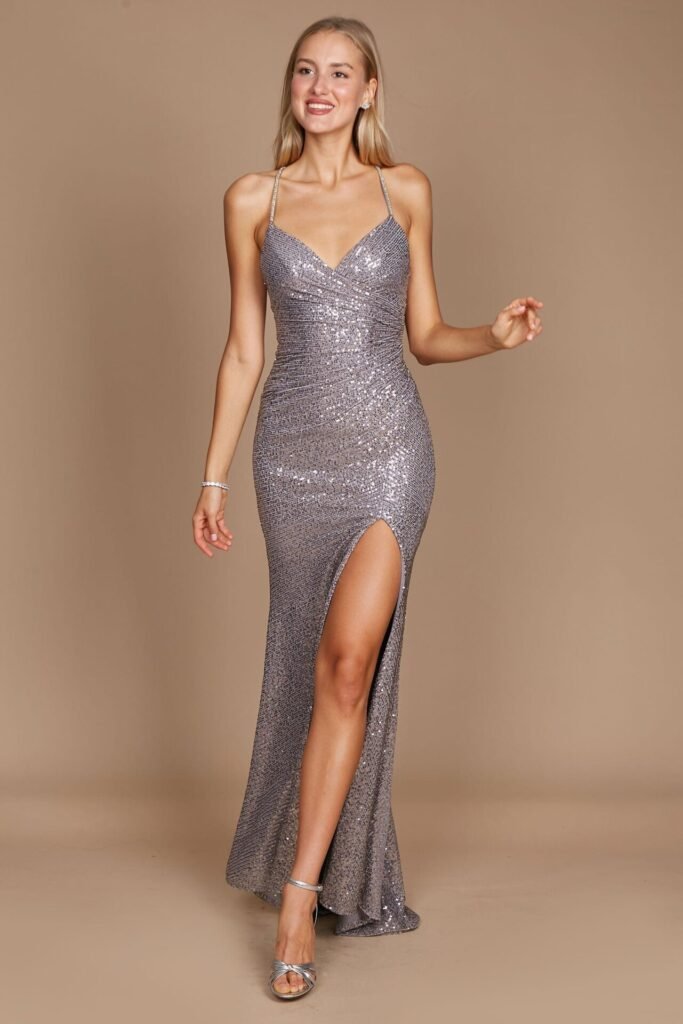
Weddings are where styling sensitivity becomes most important. A silver prom dress appropriate for formal events can be used in this context, but only under controlled conditions.
Wedding Guest Style Rules for Metallic Dresses
Wedding etiquette is built around balance, respect, and visual moderation.
In wedding guest outfit metallic tones, silver is acceptable when:
- the finish is soft rather than highly reflective
- sparkle is controlled or minimal
- the overall silhouette is elegant and non-dominant
The goal is not to avoid elegance, but to avoid overshadowing the event itself.
Safe Silver Styling for Wedding Events
To make a silver dress appropriate for weddings, styling must reduce intensity.
Recommended adjustments:
- satin or matte-silver fabrics instead of heavy sequins
- neutral-toned shoes such as nude or soft metallics
- minimal jewelry without layered sparkle
- soft makeup rather than high-glam shimmer
This creates a restrained interpretation of a silver prom dress appropriate for formal events, suitable for respectful social environments.
When Silver Dresses Should Be Avoided at Weddings
There are scenarios where silver is not appropriate, even with styling adjustments:
- traditional or conservative ceremonies
- daytime outdoor weddings with natural lighting dominance
- weddings with strict aesthetic themes (rustic, minimalist, cultural formality)
In these cases, silver may still appear too reflective or visually strong.
How to Make a Silver Prom Dress Look Appropriate for Different Formal Events
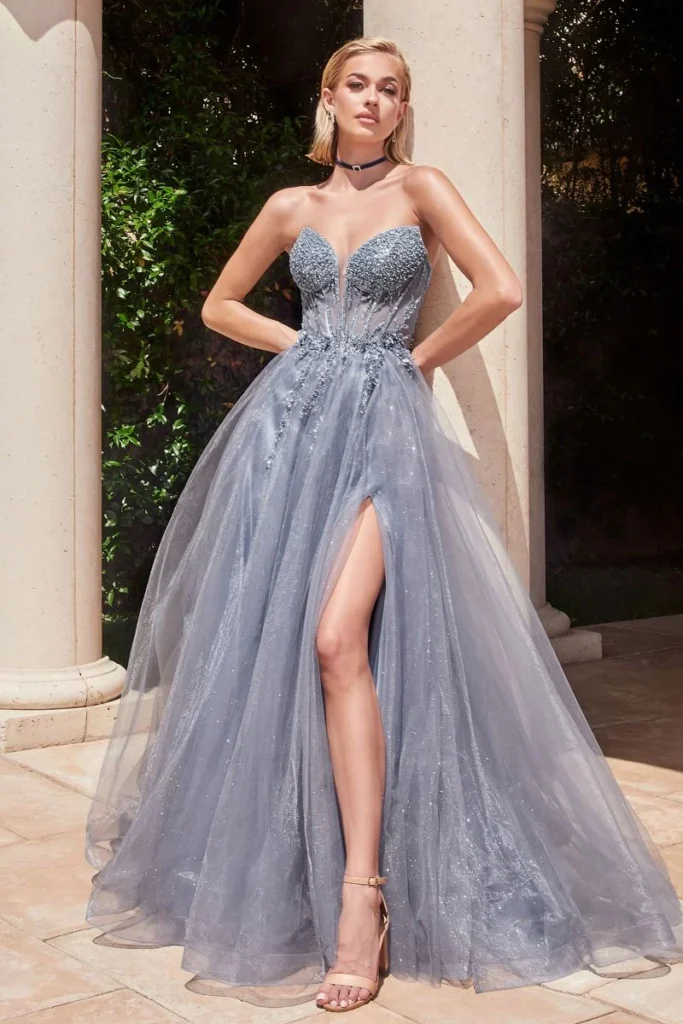
The real answer to whether a silver prom dress appropriate for formal events depends less on the dress itself and more on how it is repositioned through styling. The same silver gown can feel youthful at a prom, refined at a gala, or inappropriate at a wedding if its styling language is not adjusted to the context.
In professional styling practice, silver is treated as a “context-sensitive material.” It reacts strongly to accessories, lighting, and silhouette framing. This means the goal is not to change the dress, but to shift its visual message so it aligns with the expectations of each event type.
Fabric Perception and Formal Transformation
Fabric choice and finish are the first indicators of formality level in a silver prom dress appropriate for formal events.
Different finishes create different perceptions:
- satin silver → elegant, controlled, gala-friendly
- matte silver → understated, wedding-appropriate
- sequin-heavy silver → high-impact, better for galas or evening parties
- glitter textures → risky for formal weddings due to excessive brightness
In luxury formalwear styling tips, smoother fabrics are always easier to elevate across multiple event types because they reduce visual noise and allow accessories to define the tone instead of the material itself.
A key rule is simple: the more reflective the dress, the more minimal everything else must become.
Accessories as Formality Control Tools
Accessories are not decoration in a silver prom dress appropriate for formal events, they are control mechanisms that define whether the outfit feels appropriate or excessive.
Jewelry Strategy
- minimal silver jewelry → safe for weddings
- structured statement pieces → better for galas
- mixed metals → should be avoided unless carefully balanced
Jewelry should either reinforce the dress or soften it, never compete with it.
Shoe Styling Logic
Footwear directly influences perceived formality.
- nude heels → safest and most neutral option for weddings
- black heels → structured and slightly more dramatic for formal evenings
- metallic heels → suitable for gala environments where shine is acceptable
In formal dress etiquette silver outfit guide systems, shoes act as the grounding point of the entire outfit.
Bag and Clutch Selection
A clutch should never introduce additional visual conflict.
- smooth satin or matte clutches → safest choice
- metallic clutches → acceptable for gala events
- heavily embellished bags → risk overloading the outfit
The goal is cohesion, not competition.
Hair and Makeup as Context Adjusters
Hair and makeup are often the deciding factor in whether a silver prom dress appropriate for formal events feels aligned with its setting.
For Gala Events
- sleek buns or sculpted waves
- defined eyes with controlled shimmer
- structured contouring for camera-ready definition
For Wedding Events
- soft waves or low natural updos
- neutral makeup palettes
- minimal highlight to avoid competing shine
In eveningwear dress code fashion rules, makeup must always support the dress, not echo its intensity.
Common Styling Mistakes With Silver Formal Dresses
Even a well-designed silver prom dress appropriate for formal events can lose its elegance if styling mistakes are made. These mistakes are usually not about fashion taste but about misreading context and contrast intensity.
Overloading With Shine Elements
One of the most common issues is combining too many reflective elements in a single look:
- sequin dress
- glitter shoes
- rhinestone jewelry
- metallic clutch
This creates visual overload and breaks formalwear dress code expectations, especially in weddings where restraint is essential.
Luxury styling is defined not by how much shine is used, but by how precisely it is placed.
Ignoring Event Context and Dress Code Hierarchy
A major styling error is treating all formal events as visually identical. In reality, each event has its own hierarchy:
- weddings → restraint and respect
- galas → controlled glamour
- corporate formal events → minimal elegance
A silver evening gown styling guide only works when adapted to these expectations. Without context awareness, even a beautiful dress can feel inappropriate.
Misusing Prom-Level Styling in Formal Environments
Another common mistake is carrying prom styling directly into gala or wedding settings:
- heavy shimmer makeup
- overly playful accessories
- youthful hairstyles that reduce sophistication
This weakens the perception of the outfit within luxury formalwear styling tips, where maturity and refinement are key.
Underestimating Lighting and Photography Effects
Silver is highly reactive under light. This is one of the most important aspects of a silver prom dress appropriate for formal events.
Lighting impacts:
- flash photography → increases brightness dramatically
- warm indoor light → softens metallic reflection
- low lighting → deepens contrast with surroundings
Without understanding this, a dress may appear overexposed or too dull depending on the environment.
Best Silver Dress Styles for Different Formal Events
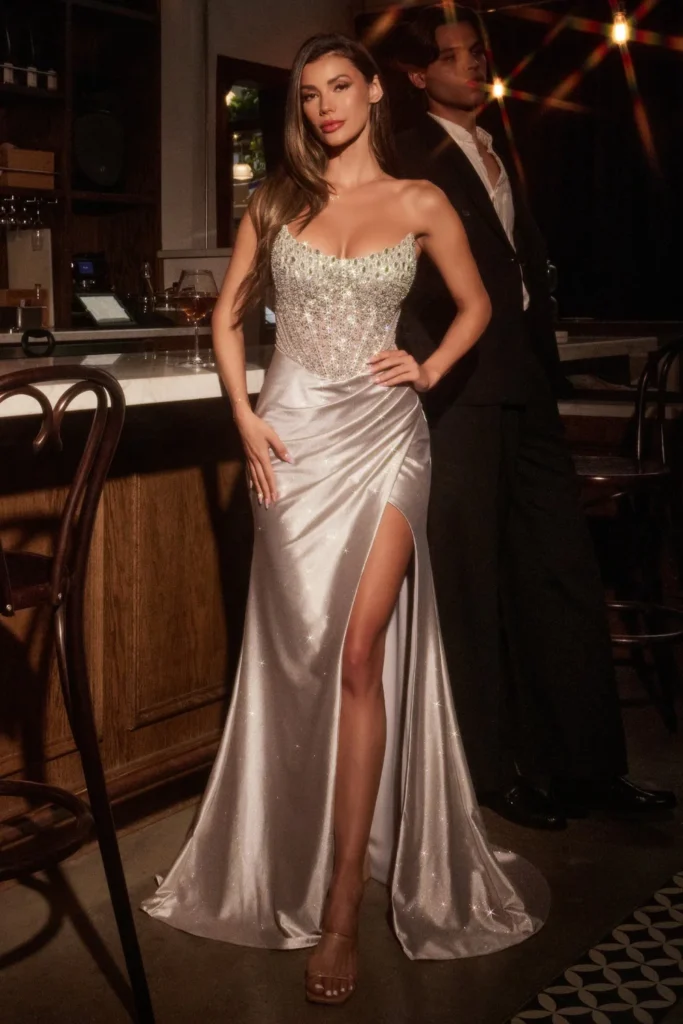
Not all silver dresses function equally across formal occasions. The structure, fabric, and silhouette determine where they fit best.
Minimal Silver Satin Gowns for Weddings
These are the safest option for wedding guest styling.
Characteristics:
- soft metallic reflection
- minimal embellishment
- elegant, flowing silhouette
They align well with wedding guest outfit metallic tones etiquette because they remain understated.
Sequined Silver Dresses for Gala Nights
These are designed for high-impact environments.
They work well when:
- lighting is controlled
- photography is expected
- styling is minimal elsewhere
In formal dress etiquette silver outfit guide systems, these are considered statement pieces, not everyday formalwear.
Structured Metallic Silver Dresses for Red Carpet Events
These dresses prioritize silhouette over decoration.
They are defined by:
- architectural cuts
- controlled metallic surfaces
- strong visual framing
Ideal for sophisticated silver gown ideas that require presence and authority.
Soft Shimmer Dresses for Semi-Formal Occasions
These are the most versatile versions.
They offer:
- reduced shine intensity
- adaptable styling options
- balanced elegance
They are the easiest to integrate into eveningwear dress code fashion rules without risk of overstatement.
Discover Elegant Silver Formal Dresses at Argenté
At Argenté, every silver prom dress appropriate for formal events is designed with adaptability in mind. Instead of treating silver as a single-purpose color, it is developed as a flexible formalwear tone that can transition across prom nights, gala events, and carefully styled wedding guest occasions.
The collection includes:
- minimal satin silver gowns for refined elegance
- structured metallic designs for formal gala settings
- soft shimmer dresses for semi-formal versatility
- modern silhouettes designed for controlled visual impact
Each piece follows formal dress etiquette silver outfit guide principles, ensuring that silver remains elegant, balanced, and context-appropriate across different formal environments.
Conclusion
A silver prom dress appropriate for formal events can absolutely extend beyond prom night, but only when it is styled with awareness of context, lighting, and dress code expectations. For gala events, silver performs exceptionally well when elevated with refined styling and controlled accessories. For weddings, it requires restraint, softer finishes, and careful reduction of visual intensity.
Ultimately, silver is one of the most versatile tones in formal fashion, but its success depends on execution rather than color alone. When styled correctly, it can move seamlessly between prom, gala, and formal guest settings without losing elegance.
At Argenté, silver is designed as a multi-context formalwear language, ensuring that each dress can adapt intelligently across eveningwear dress code fashion rules while maintaining sophistication, balance, and modern luxury appeal.