The topic of silver and gold prom dress combinations sits at the intersection of traditional fashion rules and modern styling freedom. For a long time, metallic styling followed a strict guideline: silver belongs with silver tones, gold belongs with gold tones, and mixing them was considered visually incorrect. That rule came from older fashion systems where harmony was defined by uniformity rather than contrast.
Modern prom fashion no longer operates under that limitation. Instead, styling now focuses on controlled contrast, where different metallic tones are intentionally combined to create depth, dimension, and editorial impact. At Argenté, metallic styling is treated as a structured visual system rather than a rigid rulebook. The interaction between silver and gold is studied through light behavior, fabric texture, and visual hierarchy to ensure that mixed tones enhance rather than compete with each other.
This guide breaks down whether silver and gold prom dress combinations actually work, when they succeed, when they fail, and what styling logic makes them look intentional instead of accidental.
Understanding Silver and Gold in Fashion Color Theory
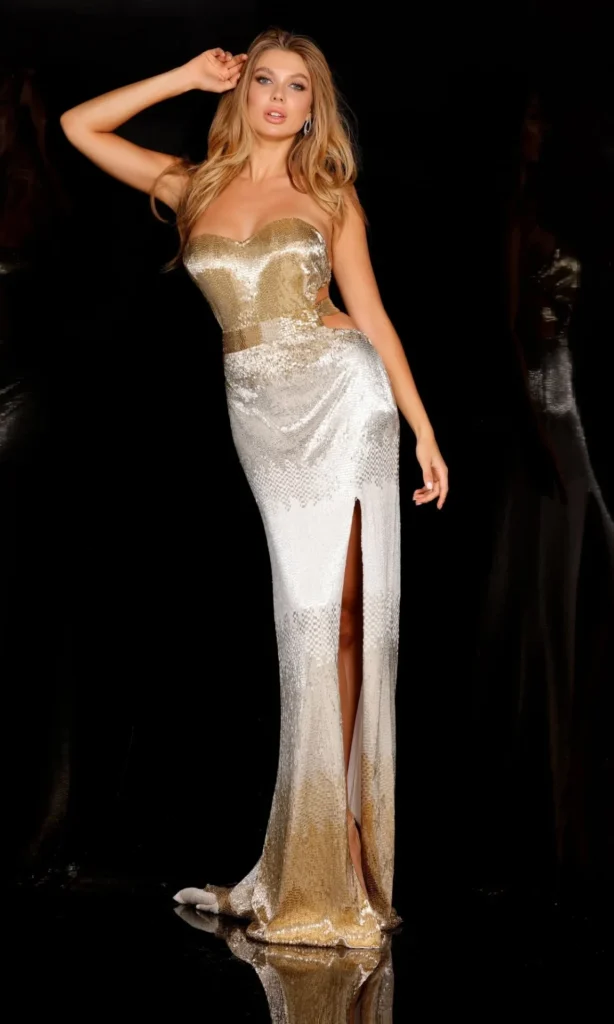
To properly understand silver and gold prom dress combinations, you need to move beyond surface color perception and look at how metallics function in fashion color theory. Unlike standard colors, metallics are not flat; they are reflective surfaces that constantly change under light.
Warm vs Cool Metallic Identity and Visual Behavior
Silver is categorized as a cool metallic tone. It reflects light in a neutral to bluish-white spectrum, which gives it a clean, modern, and structured appearance. This is why silver is often associated with minimal luxury, futuristic aesthetics, and refined simplicity.
Gold, in contrast, is a warm metallic tone. It reflects yellow, amber, and sometimes soft bronze undertones. This creates a sense of richness, warmth, and traditional luxury appeal.
In metallic dress styling guide systems, this warm vs cool distinction is essential because:
- silver visually expands and lightens compositions
- gold visually deepens and warms compositions
- combining them creates controlled contrast tension rather than uniform harmony
This is why silver and gold fashion styling rules are based on balance, not matching.
Why Metallic Fabrics React to Light Differently
One of the most important EEAT-level factors in eveningwear metallic balance is how fabrics behave under lighting conditions.
Silver fabric:
- reflects light sharply and evenly across the surface
- increases brightness under flash photography
- enhances cool environmental tones
Gold fabric:
- reflects light in softer, warmer gradients
- creates a glowing effect under artificial lighting
- enhances skin warmth visually
Because both respond dynamically to light, silver and gold prom dress combinations cannot be judged in static conditions alone. Movement, venue lighting, and photography all significantly affect the final visual result.
This is also why mixed metallic styling often performs differently in real life compared to online images.
Fashion Psychology of Metallic Contrast
From a fashion psychology perspective, silver and gold trigger different emotional responses in viewers.
Silver is associated with:
- control and structure
- clarity and precision
- modern minimalism
- futuristic elegance
Gold is associated with:
- celebration and luxury
- emotional warmth
- classic richness
- expressive confidence
When combined intentionally, fashion color contrast theory suggests they create a dual emotional system:
- silver provides visual stability
- gold introduces emotional energy
This combination is why mixed metallics are increasingly used in editorial and runway styling rather than traditional uniform outfits.
Influence of Runway and Editorial Fashion Trends
Modern fashion has redefined metallic usage entirely. On contemporary runways, designers frequently combine silver and gold in a single garment or styling concept.
In these designs:
- silver is often used as a structural foundation
- gold is layered as detail, embroidery, or highlight zones
- reflective fabrics are intentionally mixed for dimensional lighting effects
This directly influences metallic prom dress styling guide practices used in formalwear today. Instead of avoiding contrast, designers now use it as a storytelling tool.
Can You Mix Silver and Gold in Prom Dresses?
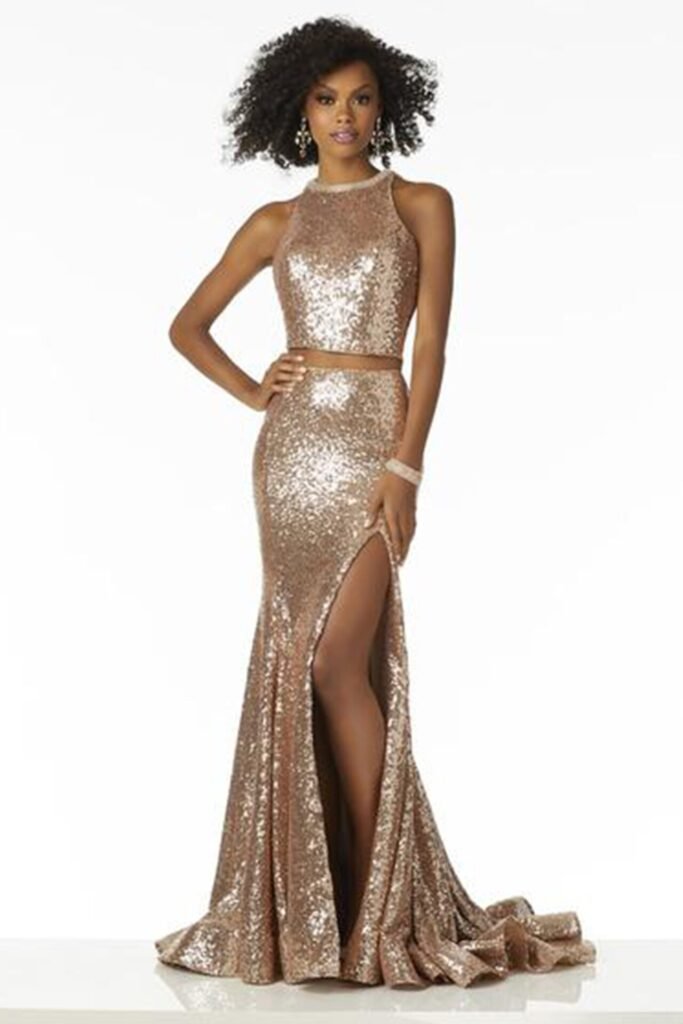
The core question behind silver and gold prom dress combinations is not just whether it is possible, but whether it can be done without breaking visual harmony. The answer depends entirely on control, hierarchy, and design intention.
When Mixing Metallics Works Successfully
Mixed metallic styling works when there is a clear dominant-subordinate relationship between tones.
Successful combinations typically include:
- silver dresses with gold accents in jewelry or embroidery
- gold gowns with silver highlighting details
- structured gowns where metallic zones are intentionally separated
These approaches follow principles of formal dress metallic contrast, where clarity and direction are prioritized over equal distribution.
When done correctly, mixed metals create:
- layered luxury perception
- structured visual depth
- editorial-level styling impact
When Mixed Metallics Fail Visually
Failure in silver and gold prom dress combinations usually occurs when both metallics compete equally.
This leads to:
- excessive visual reflection under lighting
- lack of focal direction
- confusion in silhouette reading
- breakdown of styling hierarchy
In luxury prom dress styling tips, this is considered a loss of composition control rather than a creative choice.
The Core Principle of Metallic Hierarchy
Professional stylists follow one fundamental rule:
One metallic must lead, the other must support.
This principle ensures that silver and gold fashion styling rules remain structured and readable. Leadership can shift depending on:
- dress silhouette
- fabric density
- lighting environment
- skin undertone compatibility
Without hierarchy, mixed metallic styling loses clarity and becomes visually unstable.
Stylist Approach to Mixed Metal Composition
From a professional styling perspective, mixed metallics are not about equality but about directional emphasis.
Stylists often treat:
- silver as the structural base layer
- gold as the emotional highlight layer
or reverse it depending on the design intent of the outfit.
This controlled approach defines how silver and gold prom dress combinations are executed in editorial fashion environments.
Best Core Directions for Silver and Gold Prom Dresses
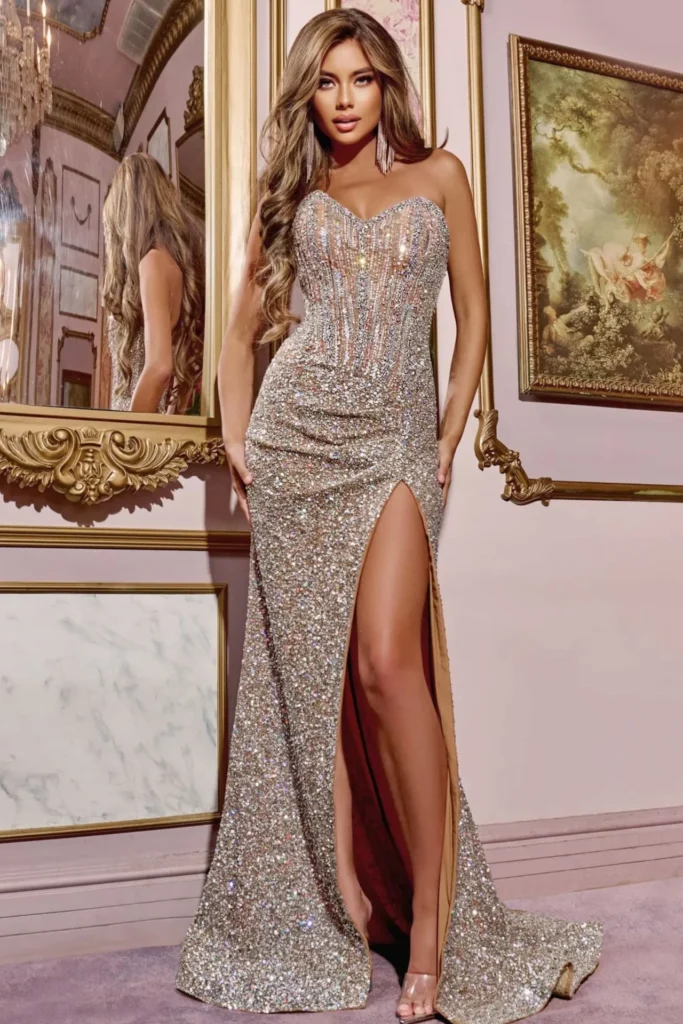
There are several foundational styling directions that consistently work within silver and gold prom dress combinations without creating visual conflict.
Silver Base With Gold Highlighting Elements
This is the most stable and widely used method. A silver dress acts as the structural foundation while gold appears in controlled accents.
Examples include:
- gold embroidery on silver fabric
- gold jewelry over silver gowns
- gold belts or detailing lines
This creates a structured cool base with warm focal contrast, a core principle in metallic prom dress styling guide systems.
Gold Base With Silver Highlighting Elements
In this structure, gold dominates while silver introduces contrast points.
This creates:
- warm visual richness
- controlled cool reflection accents
- balanced evening luxury expression
This is often seen in elegant metallic outfit combinations used for formal gala styling.
Split Metallic Design Structures
Some gowns are intentionally designed with divided metallic zones.
This creates:
- strong visual storytelling
- runway-inspired composition
- bold fashion identity
However, split designs require strict balance control to avoid breaking eveningwear metallic balance principles.
Naturally Blended Metallic Fabrics
Some fabrics mix silver and gold threads into a unified shimmer surface.
This results in:
- soft blended reflection
- reduced harsh contrast edges
- natural luxury glow effect
This is one of the most advanced forms of mixed metal prom outfit ideas.
Styling Silver and Gold Together: Advanced Outfit Composition Rules
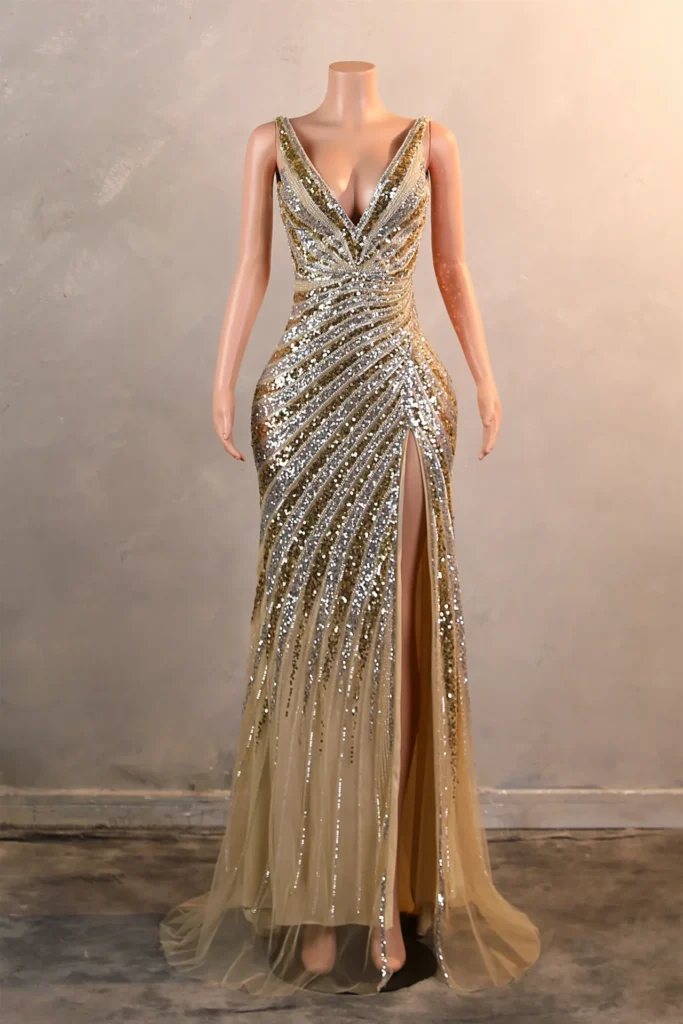
Once you understand the foundation of silver and gold prom dress combinations, the next level is learning how to control visual hierarchy in real styling situations. This is where mixed metallic outfits either look editorial and intentional or become visually confusing.
In advanced fashion theory, metallic styling is not about matching tones, but about directing attention. Silver expands light and creates openness, while gold compresses attention into warm focal points. When both appear in one outfit, the goal is not equality but structured dominance control.
Visual Hierarchy in Mixed Metallic Outfits
Every successful silver and gold fashion styling rules system relies on a clear hierarchy:
- Primary metallic (dominant identity of the outfit)
- Secondary metallic (supporting contrast layer)
- Neutral grounding elements (skin tone, shoes, minimal accessories)
If this structure breaks, silver and gold prom dress combinations lose clarity and become visually noisy.
For example:
- silver gown + gold jewelry = controlled contrast
- gold gown + silver shoes = directional balance
- equal silver and gold distribution = visual conflict
Hierarchy is what transforms mixed metals from random styling into intentional design.
Avoiding Over-Reflection and Shine Overload
One of the most overlooked issues in metallic prom dress styling guide practice is over-reflection. Metallic fabrics already interact strongly with lighting, and combining two reflective tones increases this effect.
When silver and gold are both dominant without restraint:
- flash photography becomes overexposed
- body silhouette loses definition
- visual texture becomes chaotic
The solution is not avoiding metallics, but controlling surface density. A structured satin silver dress behaves very differently from a fully sequined gold gown. Mixing both requires reducing additional reflective accessories.
This principle is essential in eveningwear metallic balance styling systems.
Balancing Accessories in Mixed Metal Looks
Accessories determine whether silver and gold prom dress combinations feel cohesive or fragmented.
Jewelry Strategy
- choose one dominant metal for jewelry
- avoid equal silver and gold layering at once
- use mixed-metal pieces only if design is minimal and structured
Shoes Strategy
- silver shoes reinforce cool dominance
- gold shoes reinforce warm dominance
- nude shoes act as neutral stabilizers
Clutch Strategy
- should echo dominant tone, not compete
- avoid glitter-heavy mixed-tone bags
Accessories should support hierarchy, not create additional competition.
Matching Metallic Outfits to Skin Undertones
Skin tone plays a major role in how silver and gold prom dress combinations are perceived.
- Cool undertones → silver-dominant styling enhances clarity
- Warm undertones → gold-dominant styling enhances glow
- Neutral undertones → flexible balance allows mixed metals
This is a critical EEAT-level consideration often ignored in casual styling advice.
When skin tone aligns with dominant metallic, the outfit looks naturally integrated instead of forced.
Lighting and Photography Impact on Mixed Metallic Dresses
Lighting completely changes how silver and gold prom dress combinations appear in real environments.
Under Flash Photography:
- silver becomes brighter and more reflective
- gold deepens and warms
- contrast becomes sharper and more dramatic
Under Warm Indoor Lighting:
- gold dominates visually
- silver softens and becomes subtle highlight
Under Natural Evening Light:
- both metals appear balanced
- textures become more visible than color dominance
This is why mixed metallic outfits often look better in controlled lighting environments like prom halls or staged photography settings.
Common Advanced Mistakes in Mixed Metallic Styling
Even when basic rules are followed, subtle mistakes can weaken the final look of silver and gold prom dress combinations.
Treating Both Metallics as Equal Focal Points
The most common advanced mistake is assigning equal importance to silver and gold.
This creates:
- split visual attention
- lack of directional focus
- confusion in outfit identity
Luxury styling always requires decision-making, not equal distribution.
Ignoring Fabric Texture Interaction
Not all metallic fabrics behave the same. Texture influences how light is reflected:
- sequins → high sparkle intensity
- satin → soft reflective glow
- metallic mesh → directional shimmer
Combining incompatible textures in metallic prom dress styling guide systems often leads to visual imbalance, even if colors are correct.
Overloading the Outfit With Secondary Shine Elements
Another common issue is adding too many additional reflective elements:
- glitter accessories
- rhinestone-heavy jewelry
- metallic makeup overload
When combined with silver and gold already present, this breaks fashion color contrast theory and reduces elegance.
Mismanaging Warm and Cool Temperature Flow
A key styling failure occurs when warm and cool metallics are placed randomly without structure.
For example:
- warm gold accessories scattered across a cool silver base
- no clear visual direction
- inconsistent tone flow
This disrupts eveningwear metallic balance and weakens the luxury perception of the outfit.
Best Occasions for Silver and Gold Prom Dresses
Prom Nights and Formal Events
Mixed metallics create strong presence in group photography and staged lighting environments.
Evening Galas and Luxury Events
Ideal for high-fashion environments where statement styling is expected.
Editorial Photography Sessions
Silver and gold combinations perform strongly under controlled lighting setups.
When Not to Use Mixed Metallics
- conservative formal dress codes
- minimal monochrome aesthetic requirements
- low-light environments with no controlled lighting
Discover Silver and Gold Prom Dresses at Argenté
At Argenté, silver and gold prom dress combinations are designed with controlled metallic engineering rather than random styling experimentation. Each gown follows structured metallic prom dress styling guide principles to ensure that warm and cool tones work together intentionally.
The collection includes:
- silver gowns with refined gold detailing
- gold dresses with subtle silver accents
- split-tone metallic prom designs
- blended shimmer fabrics for soft luxury reflection
Every piece is built to maintain eveningwear metallic balance, ensuring that mixed metals feel editorial, structured, and wearable rather than overwhelming.
Conclusion
The idea that silver and gold should never be mixed is outdated. Modern fashion treats silver and gold prom dress combinations as a controlled contrast system rather than a violation of styling rules.
When balanced correctly:
- silver provides structure and clarity
- gold adds warmth and emotional depth
- together they create layered luxury expression
However, success depends entirely on hierarchy, texture control, lighting awareness, and intentional styling decisions.
At Argenté, mixed metallic styling is treated as a refined design language within fashion color contrast theory, ensuring that every combination feels deliberate, elegant, and visually coherent. Explore Argenté’s metallic prom collection to experience how silver and gold can work together to create a modern, elevated prom statement.