Understanding preventing wardrobe malfunctions in a silver gown is an essential part of preparing for any formal event, especially prom nights or red carpet inspired occasions where movement, lighting, and fabric structure all interact at once. A silver gown is designed to stand out visually through shimmer, metallic reflection, sequins, and dramatic silhouettes such as slits or fitted bodices. However, these same design elements that create elegance also increase the risk of wardrobe malfunctions if not handled correctly.
Most wardrobe issues do not happen because the dress is poorly made, but because of how it is worn and moved in. Slits can open too widely during walking or dancing, sequins can catch on surfaces or accessories, and fitted gowns can lose stability when posture is not controlled. These risks are often underestimated until the moment they happen, which is why preparation is as important as styling.
This guide from Argenté explains preventing wardrobe malfunctions in a silver gown, focusing on movement control, sequin handling, slit safety, and structural awareness so that the dress performs exactly as intended throughout the entire event.
Why Wardrobe Malfunctions Happen in Silver Gowns
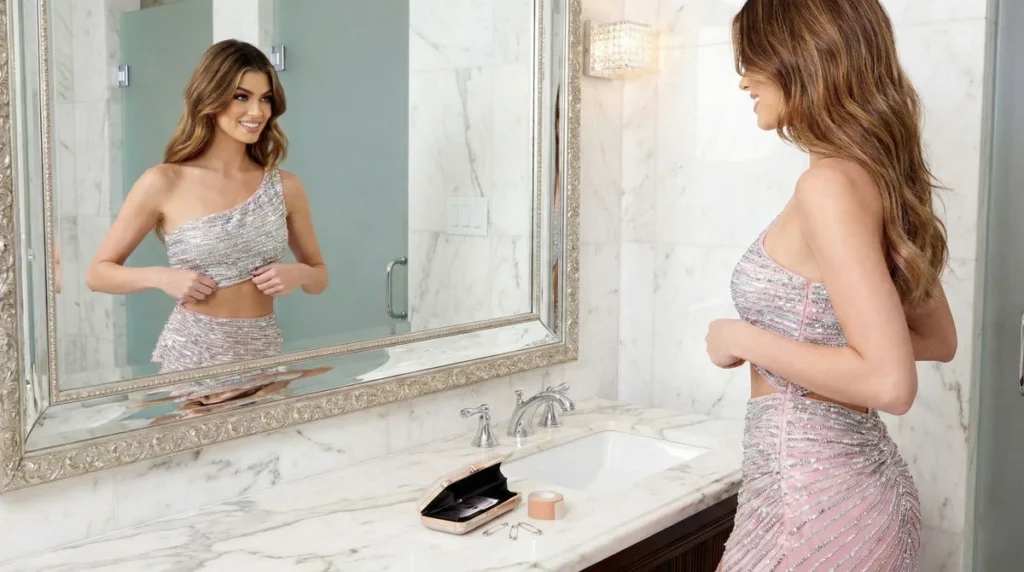
The foundation of preventing wardrobe malfunctions in a silver gown lies in understanding why these issues occur in the first place. Most problems are not random; they are the result of a structural tension between fabric design and human movement.
In formalwear biomechanics, a gown is designed as a static structure that becomes dynamic when worn. This means it must adapt to walking, sitting, dancing, and posture changes. When design complexity increases, such as adding sequins or high slits, the margin for error becomes smaller.
Silver gowns are especially sensitive because they often include:
- reflective sequin surfaces that increase friction
- metallic fabrics with limited stretch recovery
- high slits designed for visual elongation
- fitted bodices that restrict movement flexibility
In garment structural stress point theory, these elements create pressure zones where fabric is constantly under tension. If movement exceeds the fabric’s tolerance, issues such as tearing, gaping, or embellishment displacement can occur.
From a design perspective, Argenté builds gowns with controlled visual drama. However, even the best construction relies on correct handling during wear.
Understanding High-Risk Areas in a Silver Gown
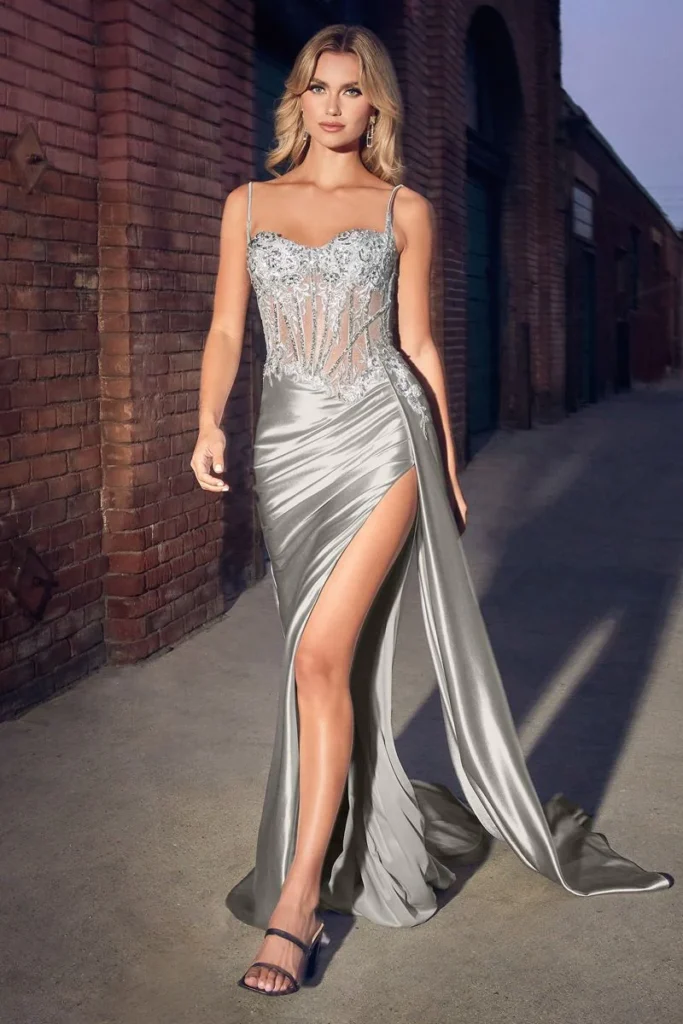
To properly approach preventing wardrobe malfunctions in a silver gown, it is essential to identify the areas where problems are most likely to occur. These zones are directly influenced by fabric type, silhouette design, and movement frequency.
Sequin Zones and Friction Points
Sequin gowns are visually striking but mechanically sensitive. In sequin friction displacement theory, each sequin is individually attached to a base fabric, meaning that repeated contact can gradually weaken its attachment.
High-risk areas include:
- underarms where arm movement causes friction
- waistline where sitting creates compression
- side seams where fabric folds repeatedly
Even minor rubbing against bags, chairs, or other clothing can loosen sequins over time, creating visible gaps in the design pattern.
Slit Design and Leg Exposure Risk
Slits are one of the most elegant features in a silver gown, but also one of the most common sources of wardrobe malfunction. In slit geometry balance safety systems, the opening of the fabric must be controlled relative to step length and walking speed.
Risks include:
- overexposure during large steps
- fabric pulling when changing direction
- accidental splitting during rapid movement
A high slit requires conscious movement control to maintain visual balance and modesty.
Strapless and Bodice Stability Issues
Many silver gowns feature strapless or fitted bodices. In dress stabilization engineering, these designs rely heavily on internal structure rather than external support.
Common risks:
- slipping during movement
- loosening due to posture changes
- reduced grip from sweat or heat
Without proper adjustment, the upper structure can shift during extended wear.
Seam Stress Under Movement
Seams are often overlooked but are critical in fabric tension distribution systems. Every movement creates micro-stress along stitching lines, especially in fitted gowns.
High-stress movements include:
- sitting abruptly
- dancing with wide arm movement
- bending or twisting the torso
Over time, these repeated actions can weaken seam integrity.
How to Walk Safely in a Silver Gown
Walking is one of the most important aspects of preventing wardrobe malfunctions in a silver gown, especially when slits or fitted silhouettes are involved.
Managing Slit Dresses While Walking
In motion-induced fabric deformation theory, slits must be controlled through step discipline. The goal is to maintain elegance without overextending fabric separation.
Key techniques include:
- taking smaller, controlled steps
- aligning knees slightly inward during movement
- keeping posture upright to stabilize fabric flow
This prevents sudden opening of the slit beyond intended design limits.
Step Control and Posture Alignment
Proper posture directly affects dress behavior. In posture-based dress control systems, the spine acts as the structural anchor for fabric movement.
Recommended alignment:
- shoulders relaxed but upright
- core engaged to stabilize hips
- balanced weight distribution while walking
This reduces uneven fabric pull on one side of the gown.
Stair Navigation Techniques
Stairs present one of the highest risk scenarios for wardrobe issues.
Best practices:
- lift hem slightly when ascending
- place foot fully before shifting weight
- avoid rushing movements
This prevents fabric from dragging or catching.
Sitting and Standing Without Dress Damage
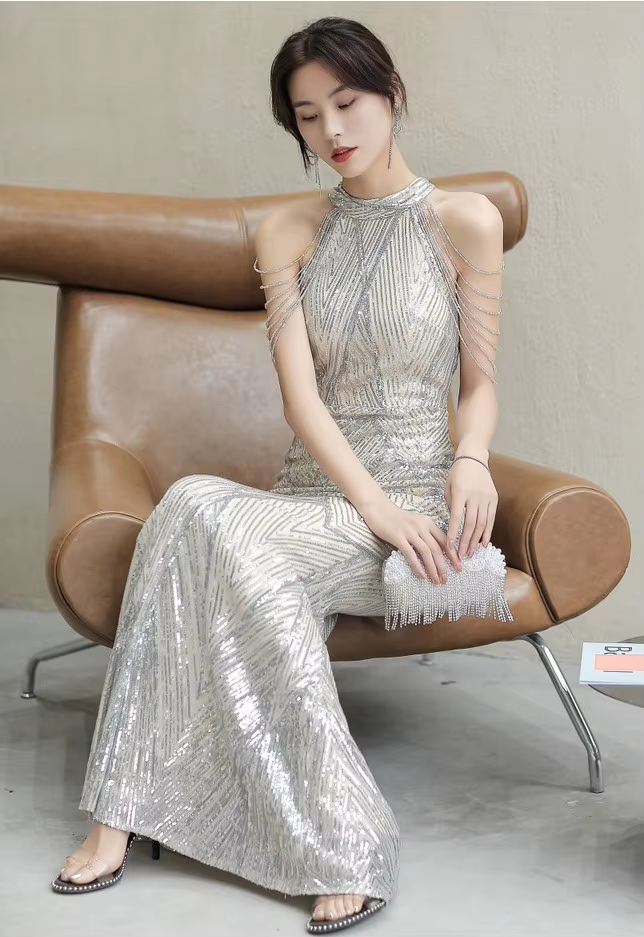
In formalwear movement safety systems, sitting and standing transitions are critical moments where fabric stress increases significantly.
Safe Sitting Position for Slit Dresses
When wearing a slit gown, sitting requires controlled positioning.
Recommended method:
- sit slowly rather than dropping into chair
- guide fabric under thighs carefully
- ensure slit is not overly stretched before sitting
This prevents fabric strain at side seams.
Preventing Sequin Compression Damage
Sequin dresses are particularly vulnerable when seated. In embellishment compression theory, pressure from body weight can flatten or distort decorative surfaces.
To reduce risk:
- avoid sitting directly on heavily embellished areas
- adjust dress slightly before sitting
- use smooth chair surfaces when possible
Chair Positioning Strategy
Where you sit also matters. Chairs with rough textures or sharp edges can damage delicate fabric surfaces.
Best practice:
- choose smooth, stable seating surfaces
- avoid leaning heavily on one side
- maintain even posture while seated
Standing Up Without Fabric Pull
Standing incorrectly can cause fabric tension spikes.
Recommended approach:
- shift weight forward before rising
- gently smooth dress downward
- avoid sudden upward movement
Dance Floor Safety in Silver Gowns
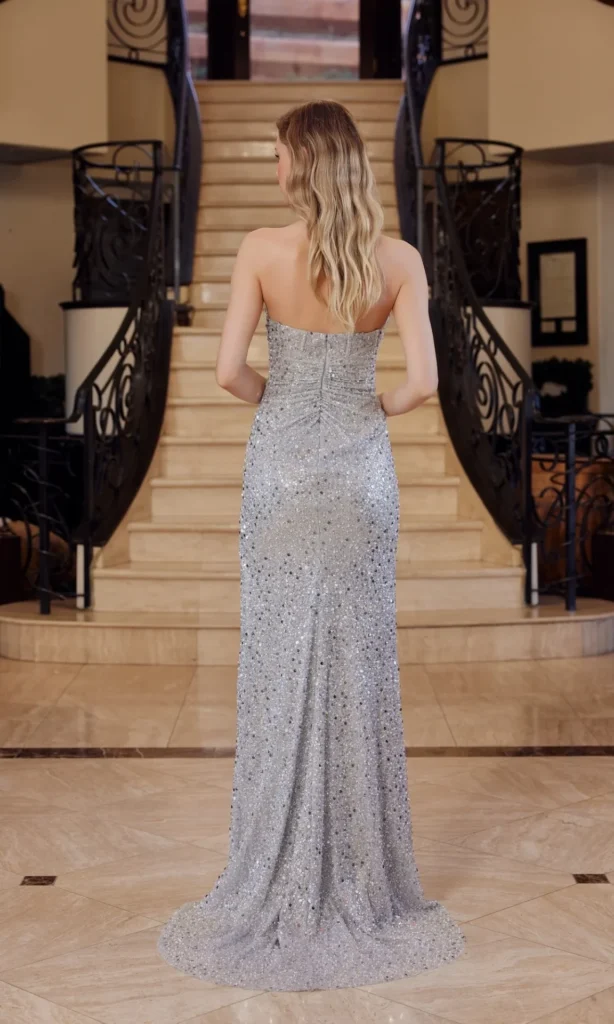
Dancing introduces the highest level of risk in preventing wardrobe malfunctions in a silver gown, due to rapid movement and fabric friction.
Movement Limits in Tight Dresses
In mobility restriction formalwear systems, tight gowns are not designed for extreme flexibility.
Safe approach:
- avoid exaggerated hip movements
- keep steps controlled and compact
- maintain center balance
Sequin Friction Control During Dancing
Sequin dresses require awareness during movement.
Key principles:
- avoid brushing against rough surfaces or other outfits
- minimize arm crossing over torso
- maintain distance from abrasive contact points
Partner Dance Safety Considerations
If dancing with a partner:
- avoid pulling or guiding fabric directly
- maintain safe distance between garments
- communicate movement limits clearly
Avoiding Slit Overexposure
Slits can open unexpectedly during dancing.
Control methods:
- adjust stance frequently
- reposition fabric periodically
- maintain awareness of leg exposure angle
Emergency Wardrobe Prevention Techniques
Even with careful movement, unexpected issues can occur. In event wear risk management systems, preparation tools help reduce impact.
Common solutions include:
- fashion tape for minor adjustments
- hidden safety pins for seam reinforcement
- lightweight undershorts for slit coverage
These tools act as backup support rather than primary structure.
Emergency Wardrobe Prevention Techniques for Silver Gowns
Continuing the topic of preventing wardrobe malfunctions in a silver gown, it is important to understand that even with perfect preparation, unexpected issues can still occur during an event. This is where emergency handling techniques become essential. In event wear risk management systems, the goal is not only prevention but also rapid stabilization when something starts to go wrong.
One of the most common issues in silver gowns is minor seam loosening or sequin displacement during movement. In fabric stress response theory, these problems usually begin as micro-shifts before becoming visible malfunctions. If addressed early, they can often be controlled without leaving the event environment.
Useful emergency tools include:
- fashion tape for temporary structural support
- small safety pins for hidden seam reinforcement
- lightweight inner shorts for slit coverage control
- discreet fabric clips for temporary adjustment
Fashion tape is particularly important in strapless or fitted silver gowns. It helps stabilize bodice alignment by increasing friction between fabric and skin, reducing slipping risk during movement.
However, it is important to understand that these tools are temporary solutions. In garment structural dependency systems, they do not replace proper design integrity but act as supportive reinforcement during unpredictable motion.
Advanced Slit Control System During Movement and Photography
Slits are one of the most visually powerful elements in a silver gown, but also one of the highest-risk zones in preventing wardrobe malfunctions in a silver gown. In slit geometry balance safety systems, control is not about restricting movement completely, but about managing exposure angles.
During walking:
- keep stride length moderate and consistent
- slightly angle the front leg inward to reduce slit opening width
- maintain upright posture to stabilize fabric fall
During posing or photography:
- shift weight onto the back leg to close slit naturally
- avoid twisting hips excessively toward the camera
- reposition fabric manually between shots if needed
In camera-aware garment positioning theory, many wardrobe issues appear more visible in photos than in real life due to frozen motion frames. This makes conscious positioning even more important in formal photography moments.
Sequin Emergency Handling While Wearing the Dress
Sequin gowns require a different level of awareness because damage can sometimes occur mid-event. In sequin friction displacement theory, once a sequin begins to loosen, continued friction can accelerate detachment.
If a loose sequin or thread is noticed during the event:
- avoid pulling it immediately
- gently press it flat to minimize further movement
- reduce contact in that area for the rest of the evening
In more noticeable cases, a discreet safety pin can be used internally to stabilize fabric tension without affecting appearance.
In embellishment integrity maintenance systems, the key principle is containment rather than repair during wear. Full restoration should always be done after the event.
Red Carpet Movement Techniques for Silver Gowns
Professional styling environments such as red carpet events use structured movement techniques that are highly relevant to preventing wardrobe malfunctions in a silver gown.
In formalwear biomechanics, movement is treated as a controlled sequence rather than spontaneous action.
Key techniques include:
Controlled Step Rhythm
Instead of long strides, models use short, deliberate steps to reduce fabric tension shifts. This minimizes slit overexposure and prevents sudden pulling at seams.
Shoulder and Hip Alignment Control
Keeping shoulders aligned with hips reduces torsional stress on the gown. This is especially important in fitted or mermaid silhouettes.
Pause-Based Movement Strategy
Before turning, sitting, or posing, a brief pause allows fabric to settle naturally. This reduces unexpected shifts in sequins or slit positioning.
These methods are widely used in professional fashion environments and can be applied in prom or formal events for better stability.
Body Positioning and Camera Angle Awareness
Another advanced layer of preventing wardrobe malfunctions in a silver gown involves understanding how body positioning interacts with photography.
In visual garment perception systems, the same dress can appear dramatically different depending on angle, lighting, and posture.
Key positioning strategies:
- keep chin slightly elevated for neckline stability
- angle torso slightly rather than facing camera fully front-on
- avoid deep forward bending poses in slit dresses
- reposition arms away from high-friction sequin zones
In photography, small adjustments can significantly reduce the appearance of potential wardrobe issues while enhancing elegance.
Common High-Risk Scenarios and How to Handle Them
In event wear risk simulation analysis, most wardrobe malfunctions happen in predictable scenarios rather than random moments.
Scenario 1: Sudden Dance Movement
Risk: slit opens too wide or seam strain increases
Solution: shorten step range and stabilize core posture
Scenario 2: Sitting in Tight Dress
Risk: fabric compression and sequin stress
Solution: adjust dress before sitting and smooth fabric manually
Scenario 3: Walking on Stairs or Uneven Ground
Risk: fabric drag or heel entanglement
Solution: lift hem slightly and slow movement pace
Scenario 4: Group Photos
Risk: fabric displacement due to crowding
Solution: reposition dress between shots and maintain personal space
Choosing a Safer Silver Gown Design
Long-term success in preventing wardrobe malfunctions in a silver gown begins at the design stage. Not all gowns carry the same risk level.
In silhouette stability engineering, safer designs include:
Structured vs Flowing Silhouettes
Structured gowns provide internal support, reducing unexpected shifts during movement. Flowing gowns are more forgiving but may require more manual control.
Controlled Slit Depth
Moderate slits reduce exposure risk while maintaining elegance. Extremely high slits require advanced movement awareness.
Strategic Sequin Placement
Sequin density affects friction risk. Controlled placement in focal areas is safer than full-body coverage in high-movement dresses.
Fabric Weight and Balance
Heavier fabrics often provide more stability but require stronger structural seams to prevent stress points.
Styling Strategies That Reduce Wardrobe Risk
In fashion safety optimization systems, styling choices directly impact how a gown behaves during wear.
Undergarment Support Systems
Proper undergarments improve bodice stability and reduce movement-related shifting.
Shoe Height and Stability Balance
Excessively high heels can disrupt posture, increasing stress on slit alignment and seam tension.
Minimal Accessories Strategy
Over-accessorizing increases friction risk, especially in sequin-heavy gowns.
Hair and Posture Interaction
Loose hair may catch on sequins or straps, while structured hairstyles support cleaner movement lines.
Professional Fashion Insights from High-End Styling
In professional environments such as red carpet styling, preventing wardrobe malfunctions in a silver gown is treated as part of performance preparation.
In couture movement engineering principles, stylists often rehearse walking, sitting, and posing with the dress before the event to identify potential risk zones.
Professional models also:
- practice controlled walking patterns
- rehearse turning angles to avoid slit overexposure
- test sitting positions before appearing publicly
These practices reduce unpredictability and ensure consistent garment performance under pressure.
Discover Structured Silver Gowns at Argenté
At Argenté, silver gowns are designed with both visual impact and movement stability in mind. Each silhouette is developed to reduce unnecessary risk while maintaining elegance and modern appeal.
Key design principles include:
- reinforced seam construction in high-stress zones
- controlled slit engineering for balanced exposure
- optimized sequin placement to reduce friction overload
- fabric selection based on movement adaptability
In garment structural stability design systems, the goal is not to eliminate glamour but to ensure it remains wearable in real-world conditions.
Conclusion
Understanding preventing wardrobe malfunctions in a silver gown requires more than styling knowledge. It is a combination of movement control, fabric awareness, and situational preparation. Most issues such as slit overexposure, sequin loss, or seam stress come from predictable movement patterns rather than random failure.
By mastering walking technique, sitting posture, dance control, and emergency handling, it becomes possible to wear even the most detailed silver gown with confidence and stability.
Ultimately, the key is balance. A silver gown is designed to stand out, but it performs best when the wearer understands how to move with it rather than against it.
At Argenté, every gown is created with this balance in mind, combining visual drama with structural intelligence so that elegance remains controlled, wearable, and consistent throughout the entire event.